What Shirodhara is
Shiro means head; dhara means a continuous stream. In this therapy, warm medicated oil — or, depending on the condition, a herbal decoction, buttermilk or milk — is poured in an unbroken stream onto the forehead from a vessel suspended at a fixed height, moving gently side to side across the brow. A session runs 30 to 45 minutes.
The therapy belongs to the Murdha Taila group of head treatments described in classical Ayurvedic texts, and it is classified as a Purvakarma or standalone Snehana procedure rather than one of the five eliminative Panchakarma actions.
At a glance
- Session length: 30–45 minutes, plus rest afterwards
- Typical course: 7 to 14 consecutive days
- Best suited to: insomnia, chronic stress, anxiety, migraine, hair fall, early cervical spondylosis
- Sensation: warm and quietly monotonous — most patients fall asleep partway through
- Aftercare: oil is left in the hair for a period, so plan to head home rather than back to the office
What patients come to us for
Sleep that will not come
Difficulty falling asleep, waking at 3 AM, or sleeping without feeling rested is the single most common reason patients ask for Shirodhara in our Ravet clinic. In Ayurvedic terms this is usually aggravated Vata disturbing the mind. The steady thermal and tactile rhythm of the oil stream tends to shift patients out of a hyper-alert state, and a course of sessions is generally more useful than a single one.
Stress and anxiety
IT professionals across Pimpri-Chinchwad, Wakad and Hinjewadi form a large part of this group — long screen hours, irregular meals and shift work. Shirodhara is frequently combined with dietary correction and, where appropriate, Medhya Rasayana herbs.
Migraine and recurring headache
For migraine we usually pair Shirodhara with Nasya, which delivers medicated oil directly to the nasal passages and paranasal sinuses. See our dedicated page on Ayurvedic migraine treatment for the full protocol.
Hair fall and scalp health
Where hair fall is driven by stress and Pitta aggravation rather than by a nutritional or hormonal cause, patients often report improvement in scalp condition over a course. Where the cause is thyroid dysfunction or anaemia, that cause needs to be addressed first — which is why we ask for recent blood work.
What a session is actually like
You will lie on your back on a wooden droni table with your head supported. A light head and shoulder massage precedes the pouring. The oil is warmed to slightly above body temperature and tested before it touches you. Your eyes are covered and a cloth band protects them from oil runoff.
Then it is simply quiet: the stream moves slowly across the forehead for the duration. Most people lose track of time. Afterwards you rest for 10–15 minutes, and the oil is left on the scalp for a while before a warm-water wash.
The choice of oil is not incidental — Ksheerabala, Brahmi, Bhringraj and other preparations are selected for your constitution and complaint, which is why a consultation precedes the first session.
Who should not have Shirodhara
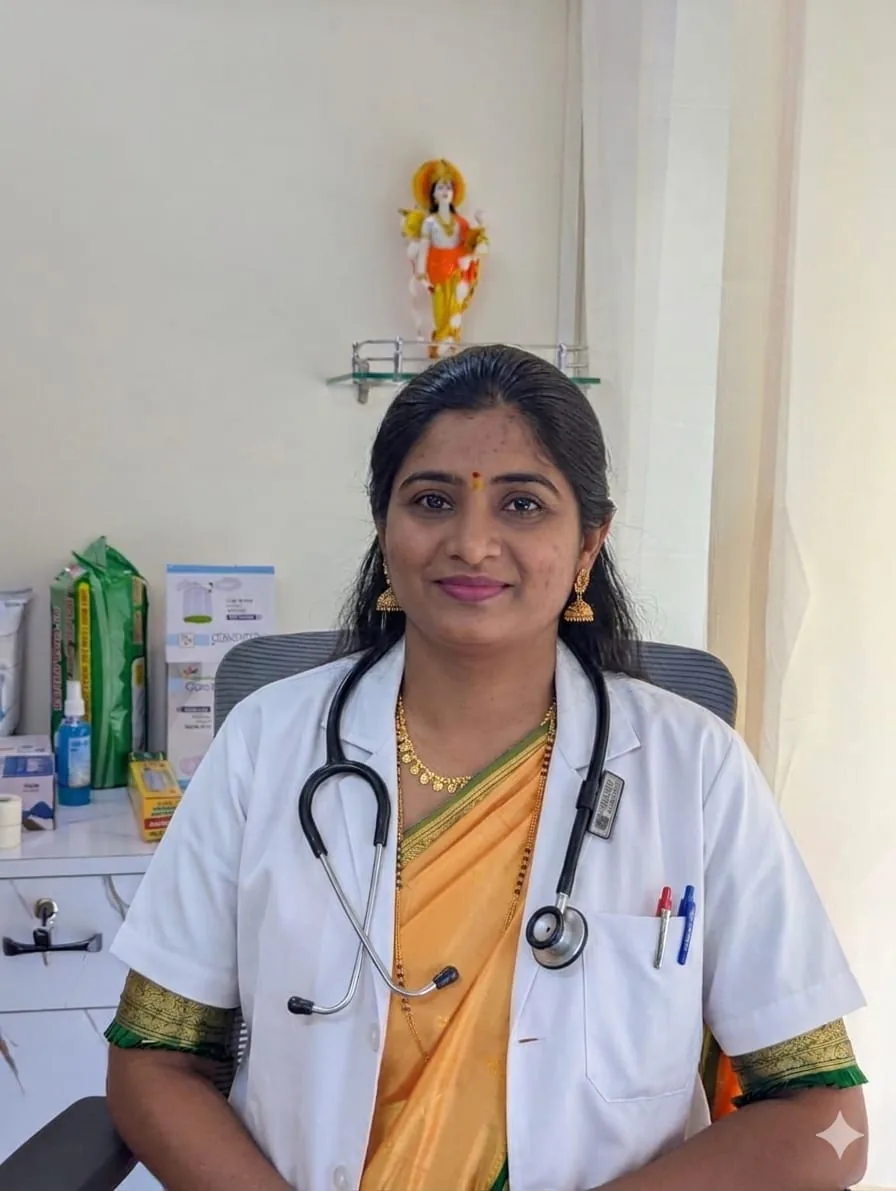
It is a gentle therapy, but it is not universally appropriate. We screen for and generally avoid or modify it in cases of acute fever or infection, severe cold and congestion, recent head or neck injury, third-trimester pregnancy, and uncontrolled hypertension. Tell us about any scalp condition or oil allergy at consultation.
Booking at our Ravet clinic
Sessions are by appointment, Monday to Sunday 9:00 AM to 8:00 PM, closed Wednesdays. Because the oil stays in the hair afterwards, many patients prefer a late-afternoon or evening slot.
Related treatments
This page is general health information about classical Ayurvedic practice and is not a substitute for individual medical advice, diagnosis or treatment. Outcomes vary between patients. Please consult a qualified physician before beginning any therapy, and do not discontinue prescribed medication without speaking to the doctor who prescribed it.